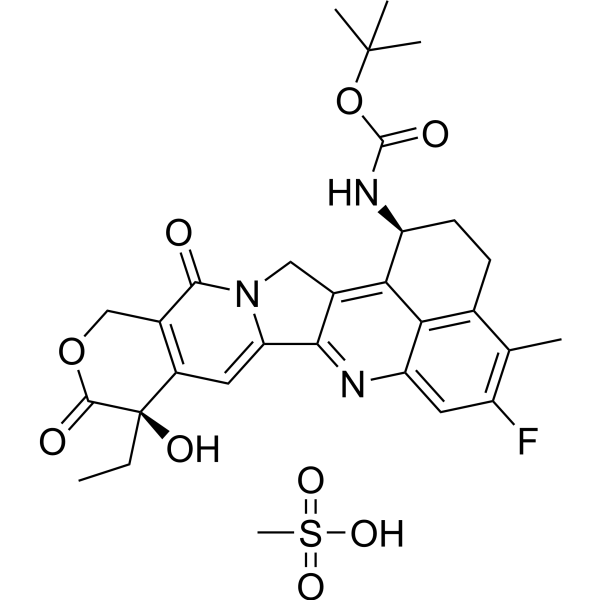
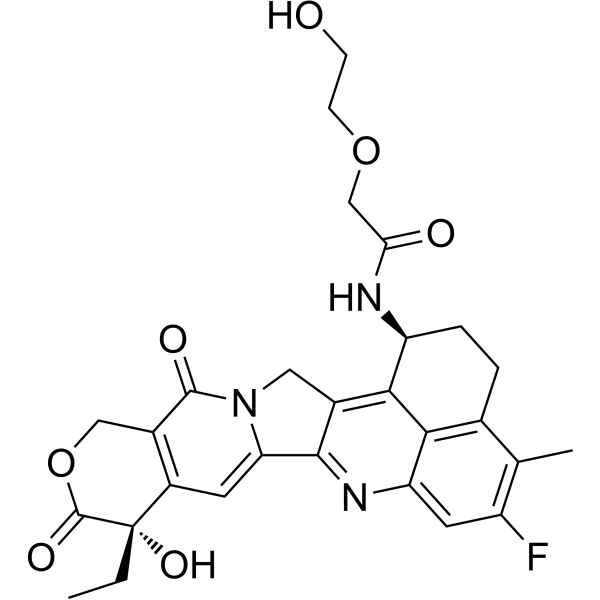
Camptothecins
Camptothecins act through DNA topoisomerase I (Top1), an enzyme essential for DNA replication and transcription[1][2]. Mechanistically, camptothecin, topotecan, and irinotecan stabilize Top1-DNA cleavable complexes, block DNA resealing, and generate replication-associated DNA double-strand breaks[3][4]. This Top1-focused mechanism distinguishes camptothecins from Top2 inhibitors, which can induce DNA damage in both replicating and non-replicating cells[3]. In intact cells, topotecan-induced Top1-DNA covalent complexes can be detected by immunoblotting, immunofluorescence, or flow cytometry, supporting mechanism-based pharmacodynamic analysis[5]. In cancer models, ATR inhibition sensitizes cells to camptothecin-class Top1 inhibitors by disabling DNA replication initiation and fork elongation responses[6]. Camptothecin derivatives also poison Leishmania DNA topoisomerase IB and reduce parasitic burden in infected splenocytes[7]. For colorectal cancer research, SN-38 suppresses Nrf2 transcriptional activity and can enhance sensitivity to Nrf2-sensitive anticancer drugs[8].
References:
- [1]. Wang W, et al. The optimal choice for pancreatic anastomosis after pancreaticoduodenectomy: A network meta-analysis of randomized control trials. Int J Surg. 2018 Sep;57:111-116. [Content Brief]
- [2]. Jain CK, et al. Natural Compounds as Anticancer Agents Targeting DNA Topoisomerases. Curr Genomics. 2017 Feb;18(1):75-92. [Content Brief]
- [3]. Zhao H, et al. Relationship of DNA Damage Signaling to DNA Replication Following Treatment with DNA Topoisomerase Inhibitors Camptothecin/Topotecan, Mitoxantrone, or Etoposide. Cytometry A. 2011 Dec 2;79A:21172. [Content Brief]
- [4]. Yakkala PA, et al. Prospects of Topoisomerase Inhibitors as Promising Anti-Cancer Agents. Pharmaceuticals (Basel). 2023 Oct 13;16(10):1456. [Content Brief]
- [5]. Patel AG, et al. Immunodetection of human topoisomerase I-DNA covalent complexes. Nucleic Acids Res. 2016 Apr 7;44(6):2816-26. [Content Brief]
- [6]. Jossé R, et al. ATR inhibitors VE-821 and VX-970 sensitize cancer cells to topoisomerase i inhibitors by disabling DNA replication initiation and fork elongation responses. Cancer Res. 2014 Dec 1;74(23):6968-79. [Content Brief]
- [7]. Prada CF, et al. Gimatecan and other camptothecin derivatives poison Leishmania DNA-topoisomerase IB leading to a strong leishmanicidal effect. Biochem Pharmacol. 2013 May 15;85(10):1433-40. [Content Brief]
- [8]. Wang J, et al. SN-38, an active metabolite of irinotecan, inhibits transcription of nuclear factor erythroid 2-related factor 2 and enhances drug sensitivity of colorectal cancer cells. Mol Carcinog. 2024 Apr;63(4):742-756. [Content Brief]
-
Camptothecins Related Products (42)
Related Products (42)